

Desert guides
3-Day Merzouga Desert Tour from Marrakech: Itinerary, Price & Practical Guide (2026)
3 day Merzouga desert tour from Marrakech : itinerary, camel ride, desert camp, price from €80 and tips. Book with a local agency.
If you have only three days in Morocco and want to see the Sahara, this is the route to choose, 3 day Merzouga desert tour from Marrakech, It is intense, but it covers kasbahs, palm oases, canyons and the biggest dunes in the country in one loop. Below you will find the day-by-day itinerary, what is included, the price, the best time to go and honest advice on what to expect.
3 day Merzouga desert tour from Marrakech: key facts
Detail | Information |
|---|---|
Route | Marrakech → Ait Ben Haddou → Ouarzazate → Dades Valley → Todra Gorges → Merzouga → Marrakech |
Duration | 3 days, 2 nights (1 hotel night, 1 desert camp night) |
Starting price | From €80 per person (shared departure) |
Pick-up | 07:00 at your riad or hotel in Marrakech; departure 07:30 |
Highlights | Tizi n'Tichka pass, Ait Ben Haddou (UNESCO), Taourirt Kasbah, Valley of the Roses, Todra Gorges, Erg Chebbi, camel ride |
Transport | Air-conditioned minibus with a bilingual driver |
Availability | All year round |
Upgrades | Luxury +€65 per person, Super Luxury +€75 per person |
Reviews | 5.0/5 on Google, 360 reviews |
Day 1: Marrakech to the Dades Valley via Ait Ben Haddou
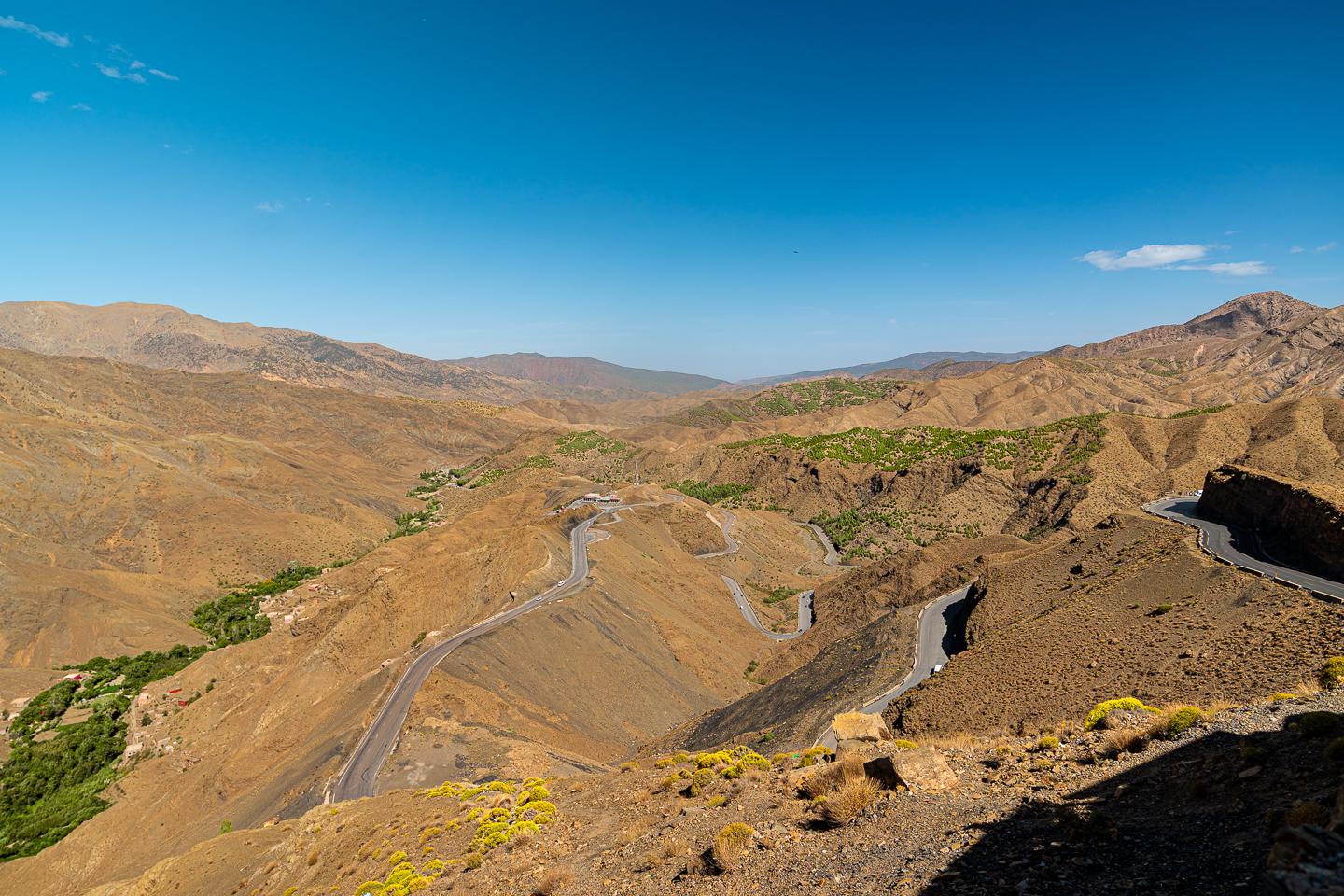
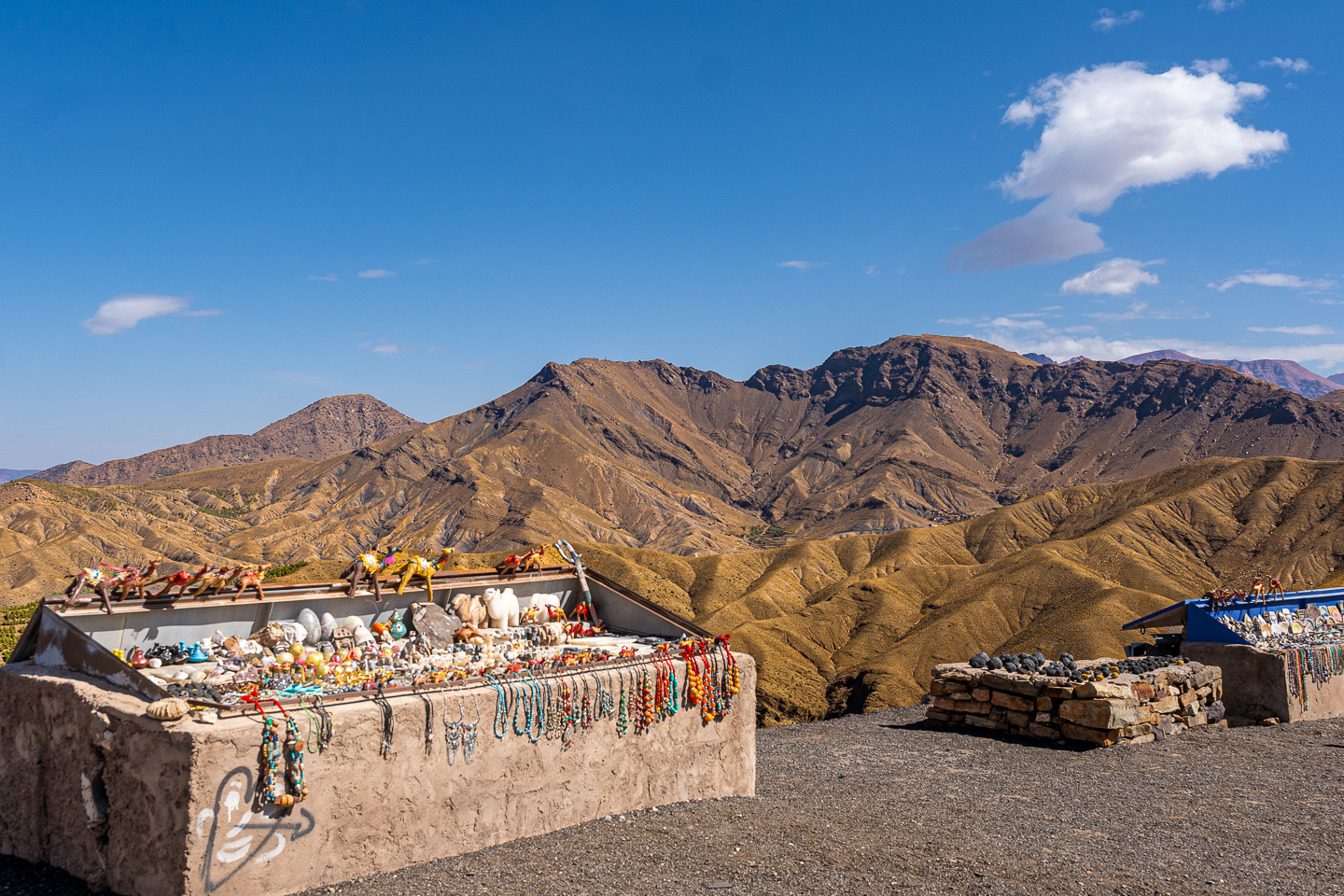
Your driver collects you at 07:00 and the day starts with the climb into the High Atlas. The road crosses the Tizi n'Tichka pass, which peaks at around 2,260 m and is one of the highest road crossings in Morocco. In winter the summits are often snow-capped, so keep a warm layer in your bag.
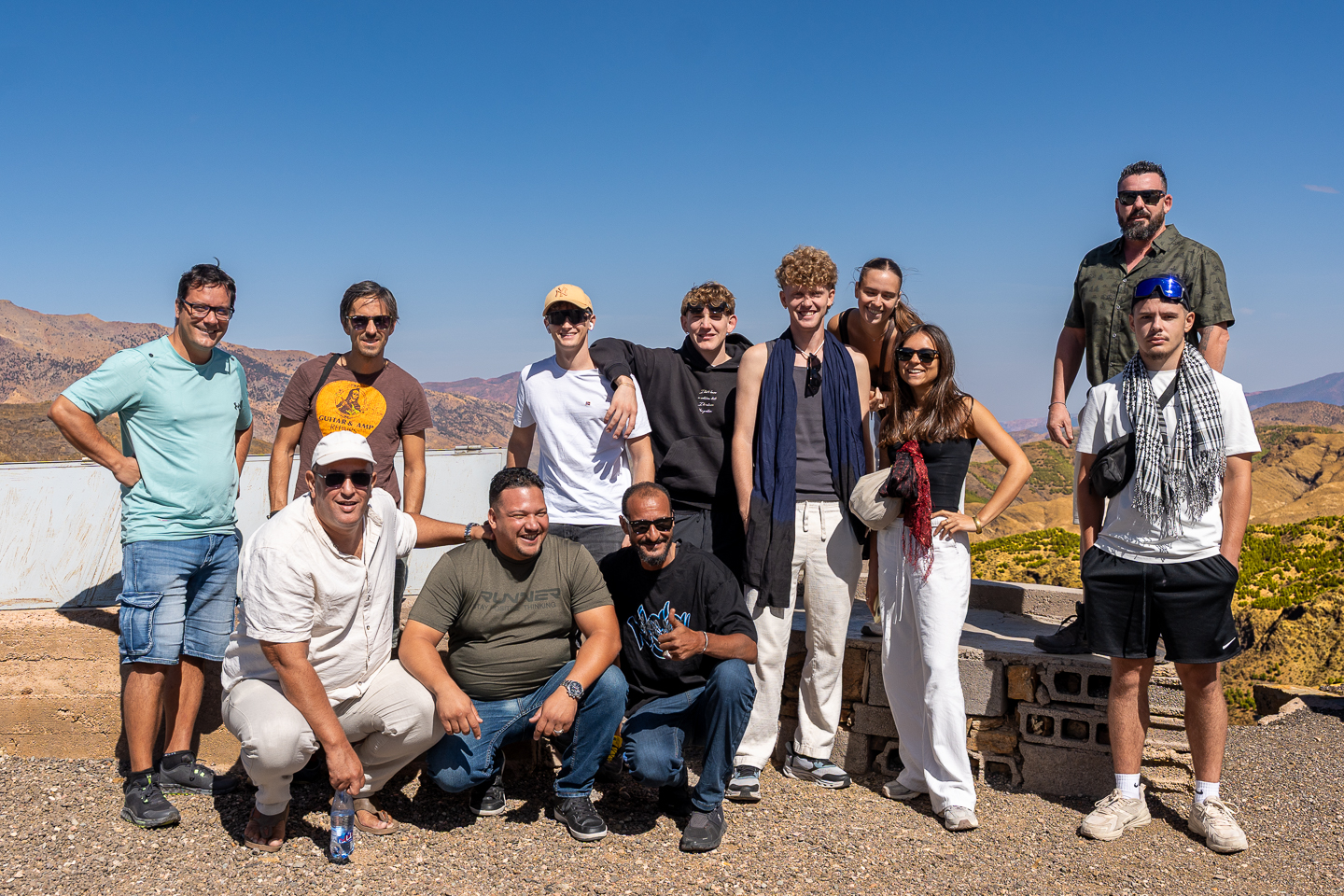
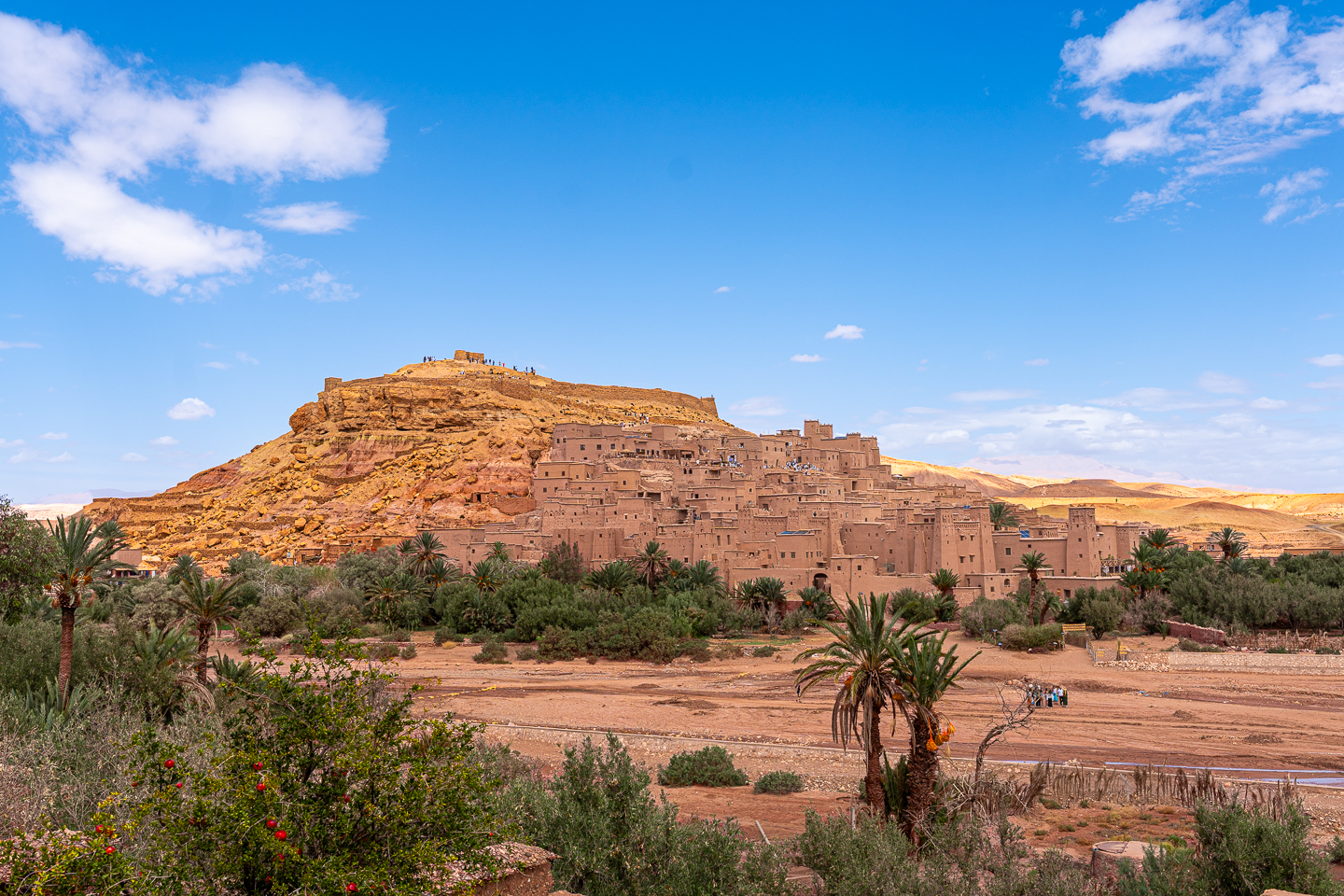
Ait Ben Haddou. The first major stop is this fortified mud-brick village (ksar), a UNESCO World Heritage Site since 1987. It has served as a film location for productions such as Gladiator and Game of Thrones, and walking its alleys explains how caravan traders once lived here.
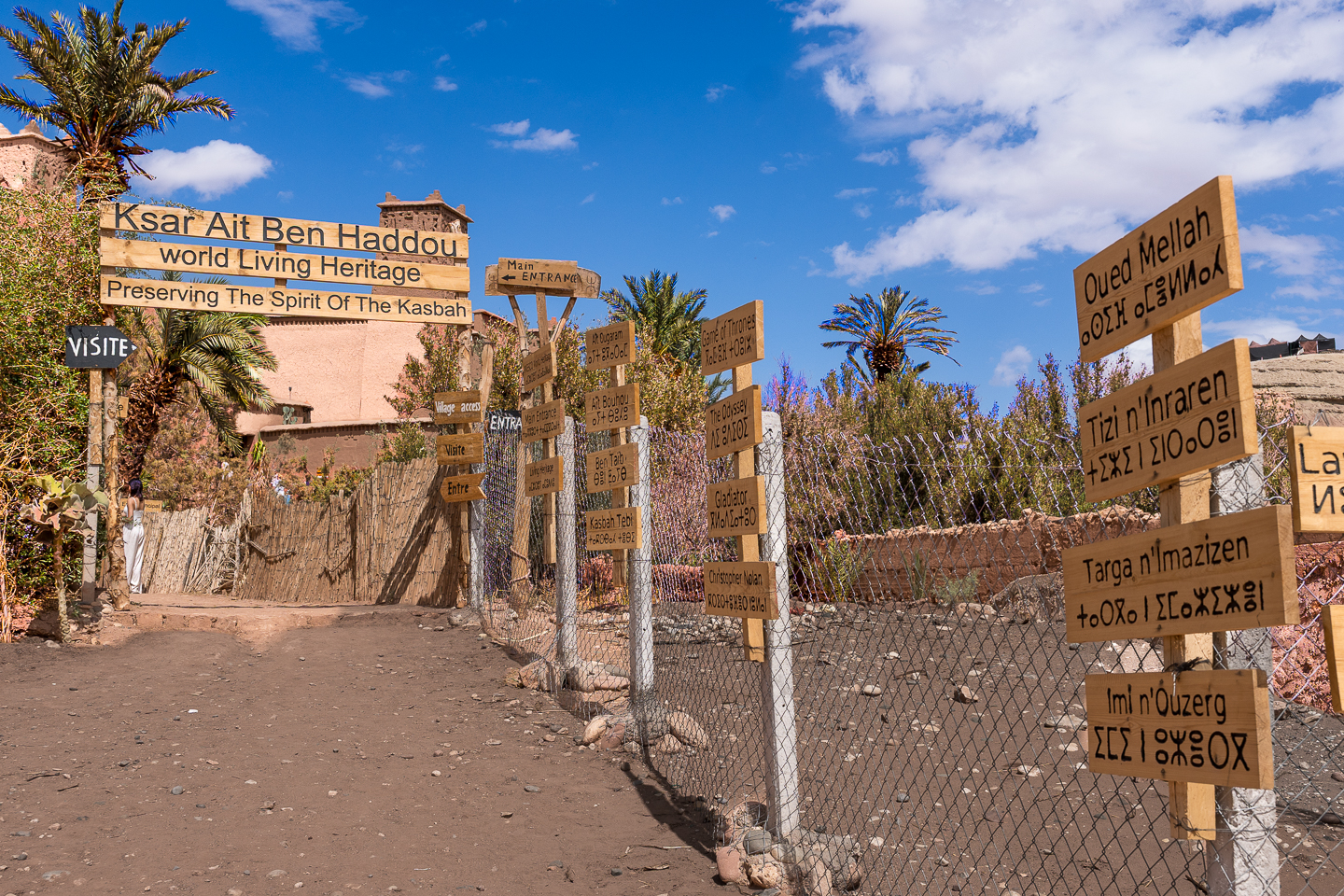
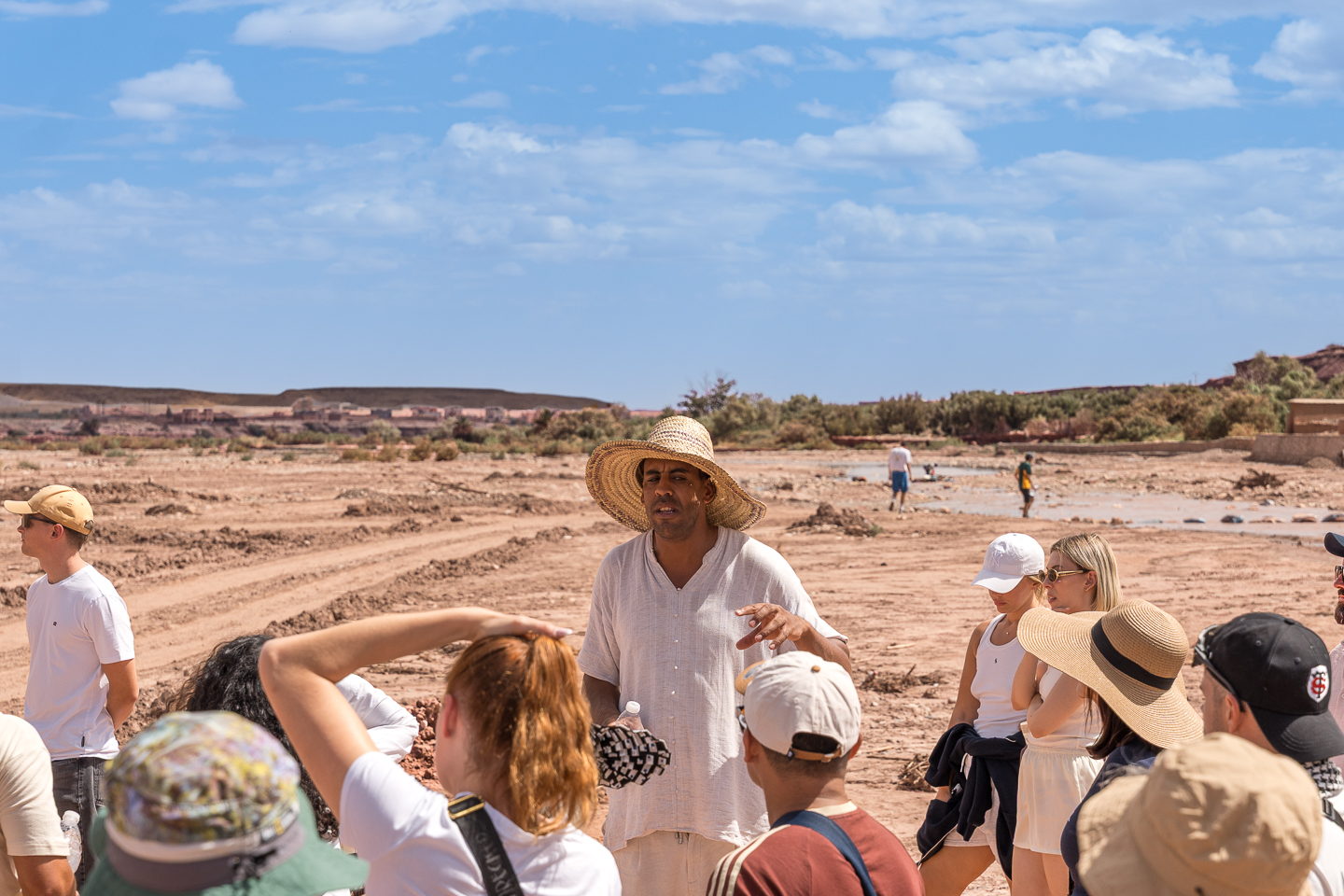
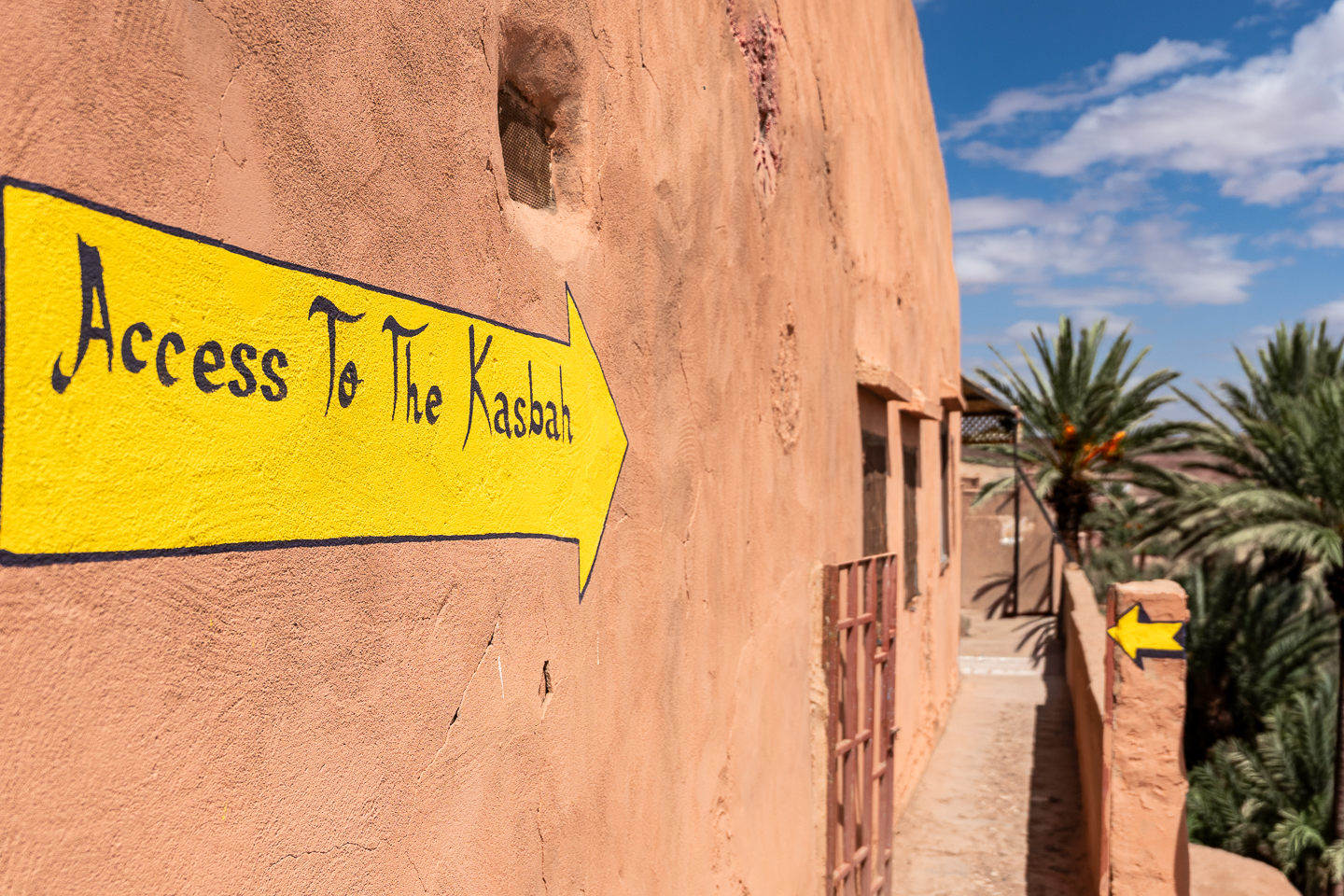
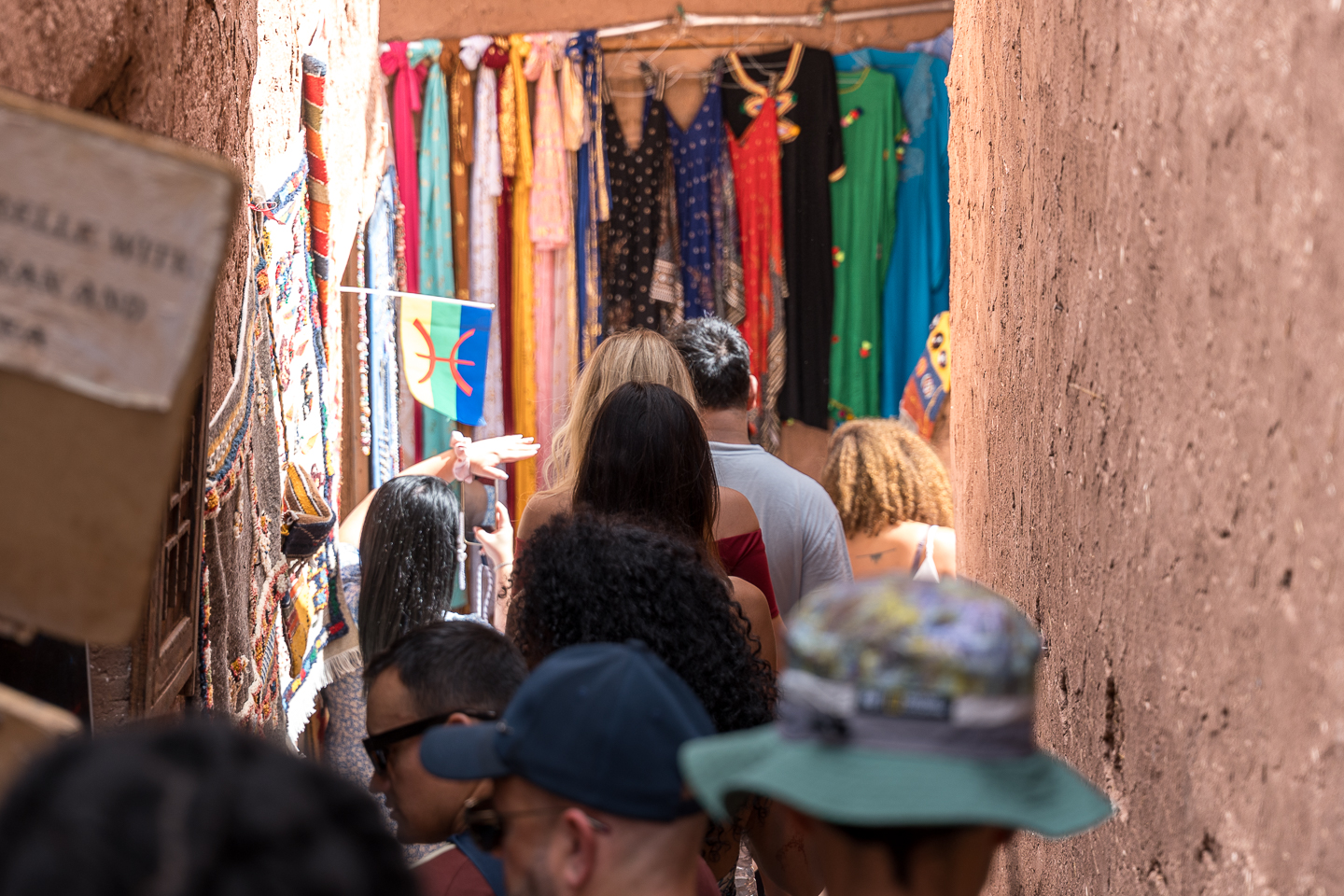
Ouarzazate and the Taourirt Kasbah. Next you reach Ouarzazate, the gateway to the south, and visit the Taourirt Kasbah, a fine example of southern Moroccan architecture.
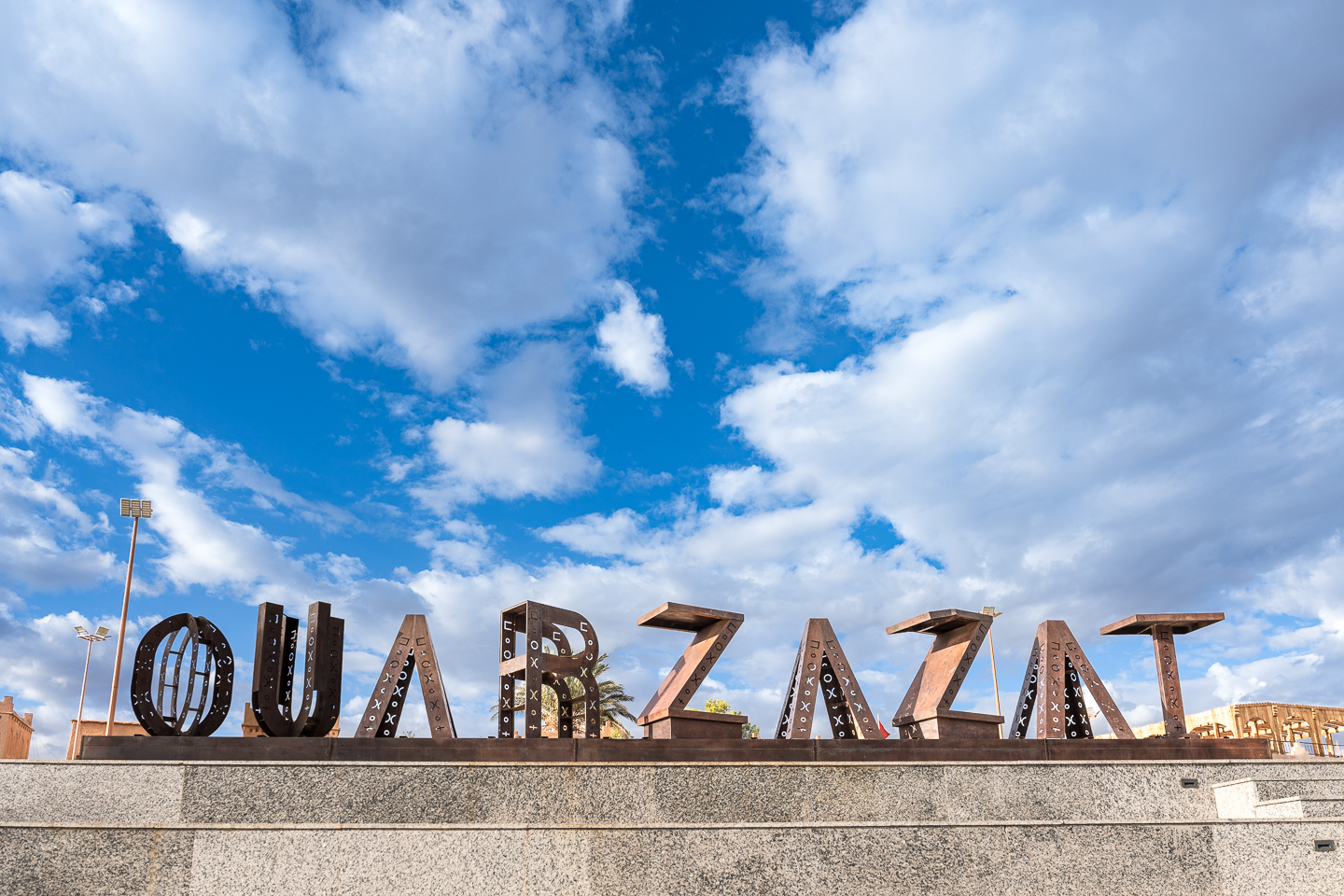
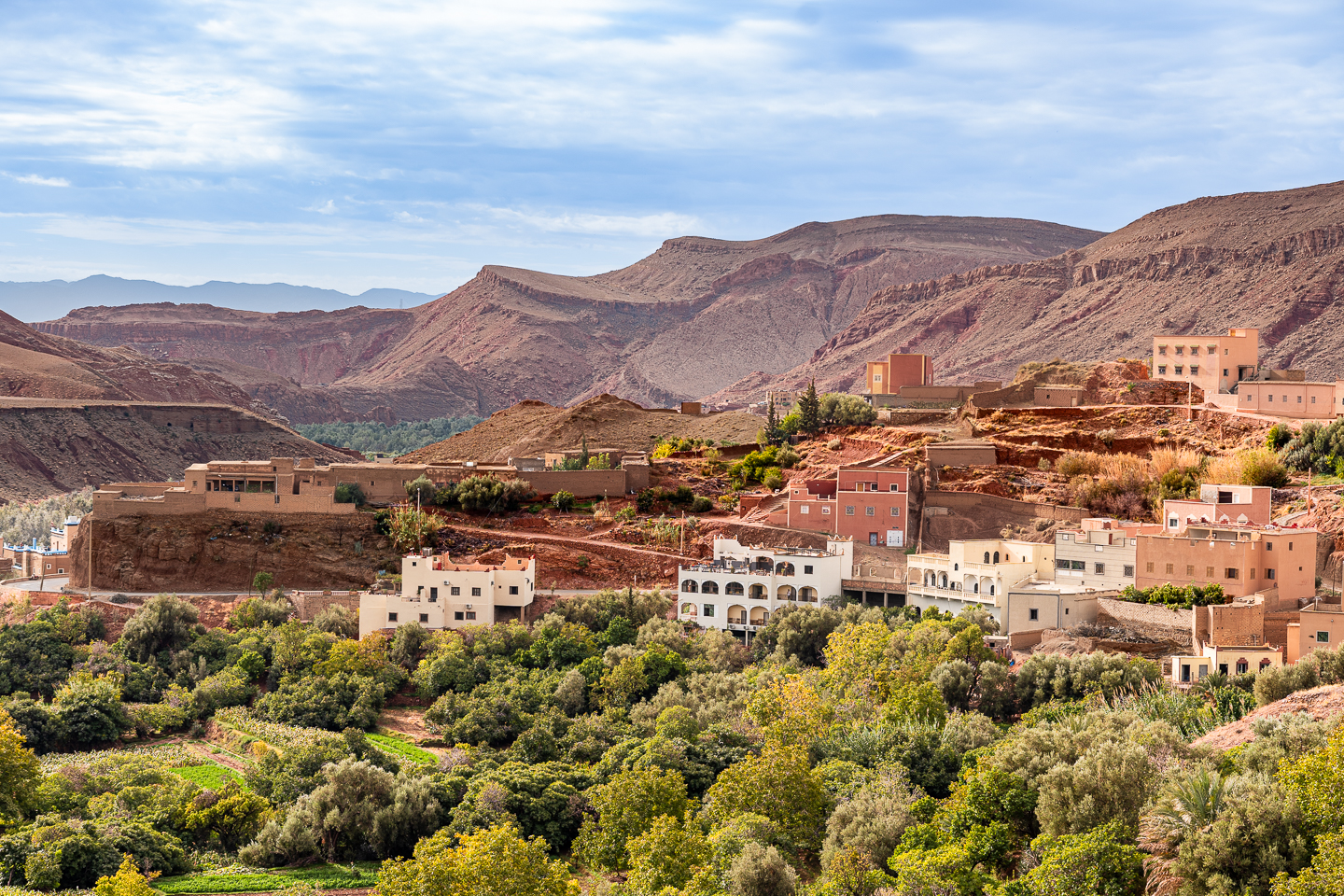
Valley of the Roses. The road continues east along the Road of 1,000 Kasbahs through the rose-growing valley. By late afternoon you arrive in the Dades Valley, where you spend the night in a hotel surrounded by canyon walls and enjoy a traditional Moroccan dinner.
Day 2: Todra Gorges and your night in the Sahara
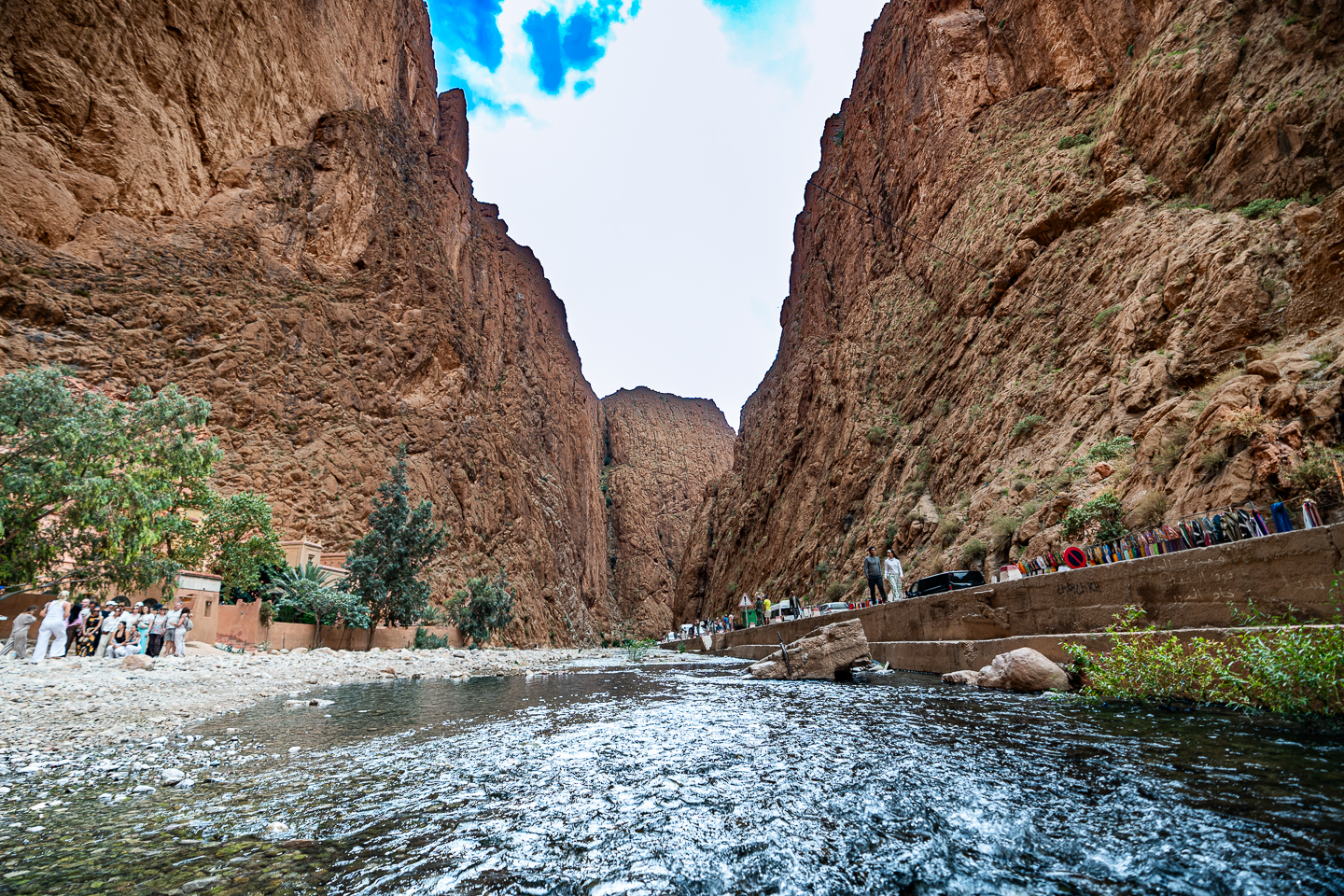
After breakfast you drive to Tinghir and the Todra Gorges, where limestone walls rise to roughly 300 m on either side of a narrow riverbed. Take 30 to 45 minutes to walk the canyon floor; it is cool, photogenic and a good break from the road.
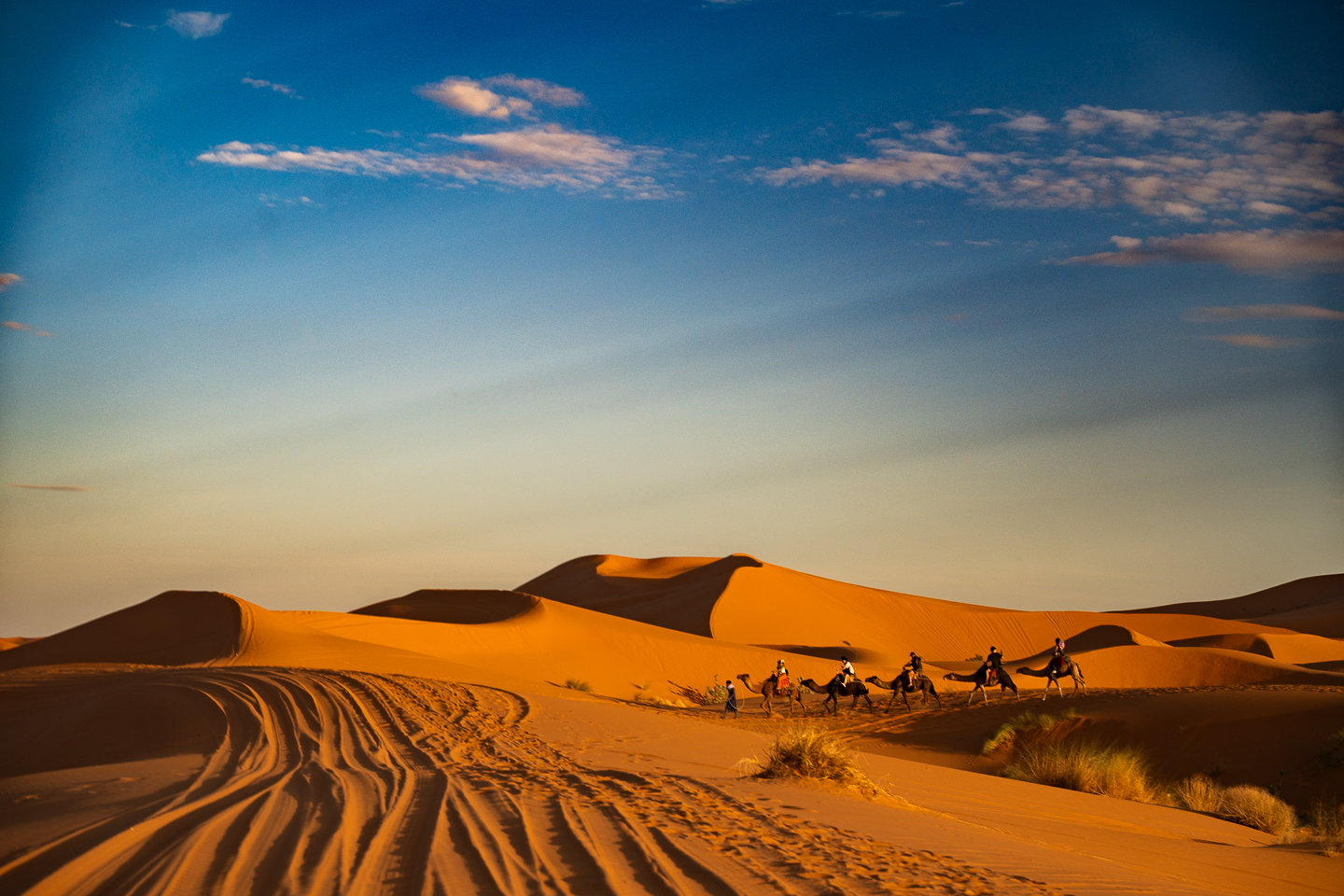
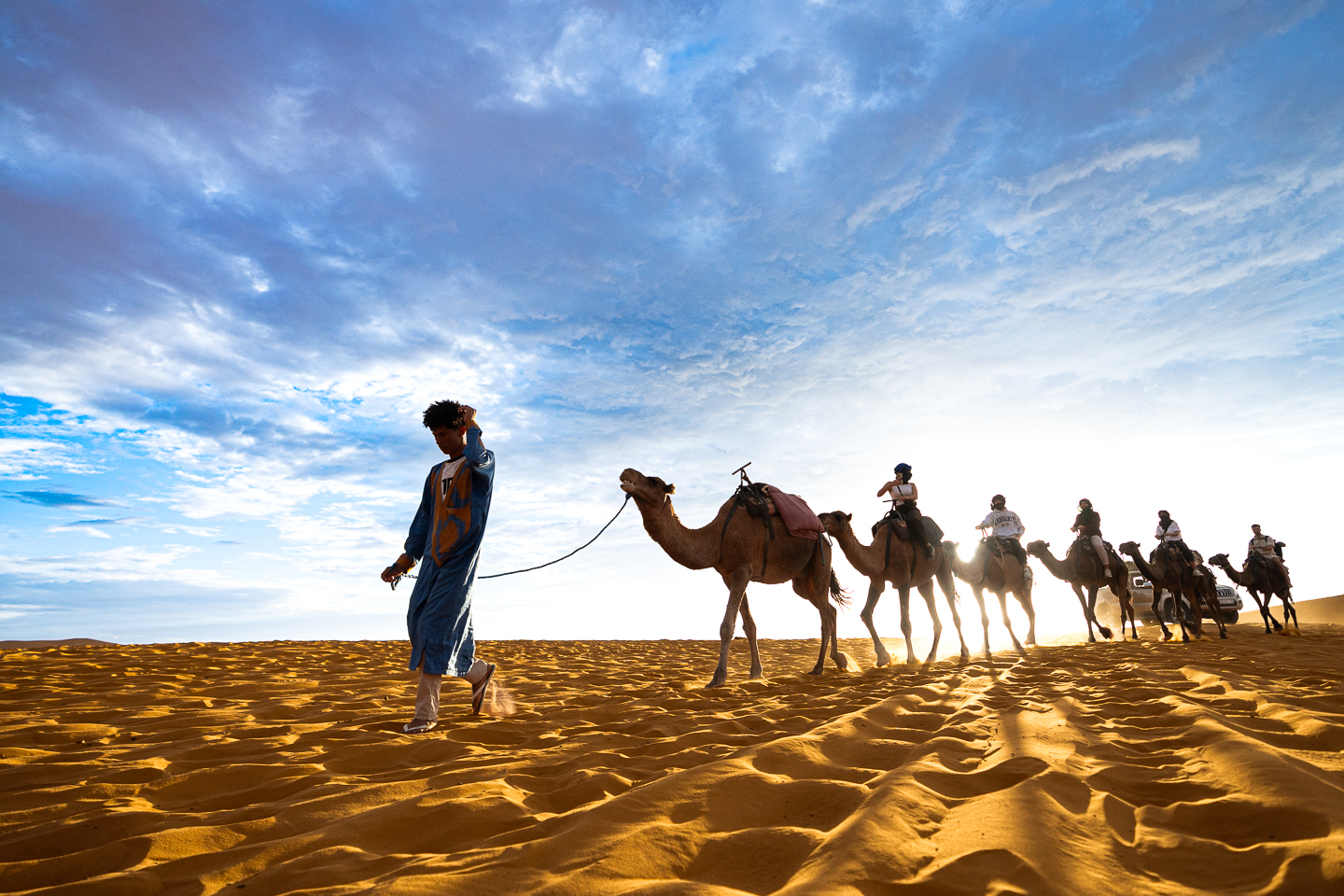
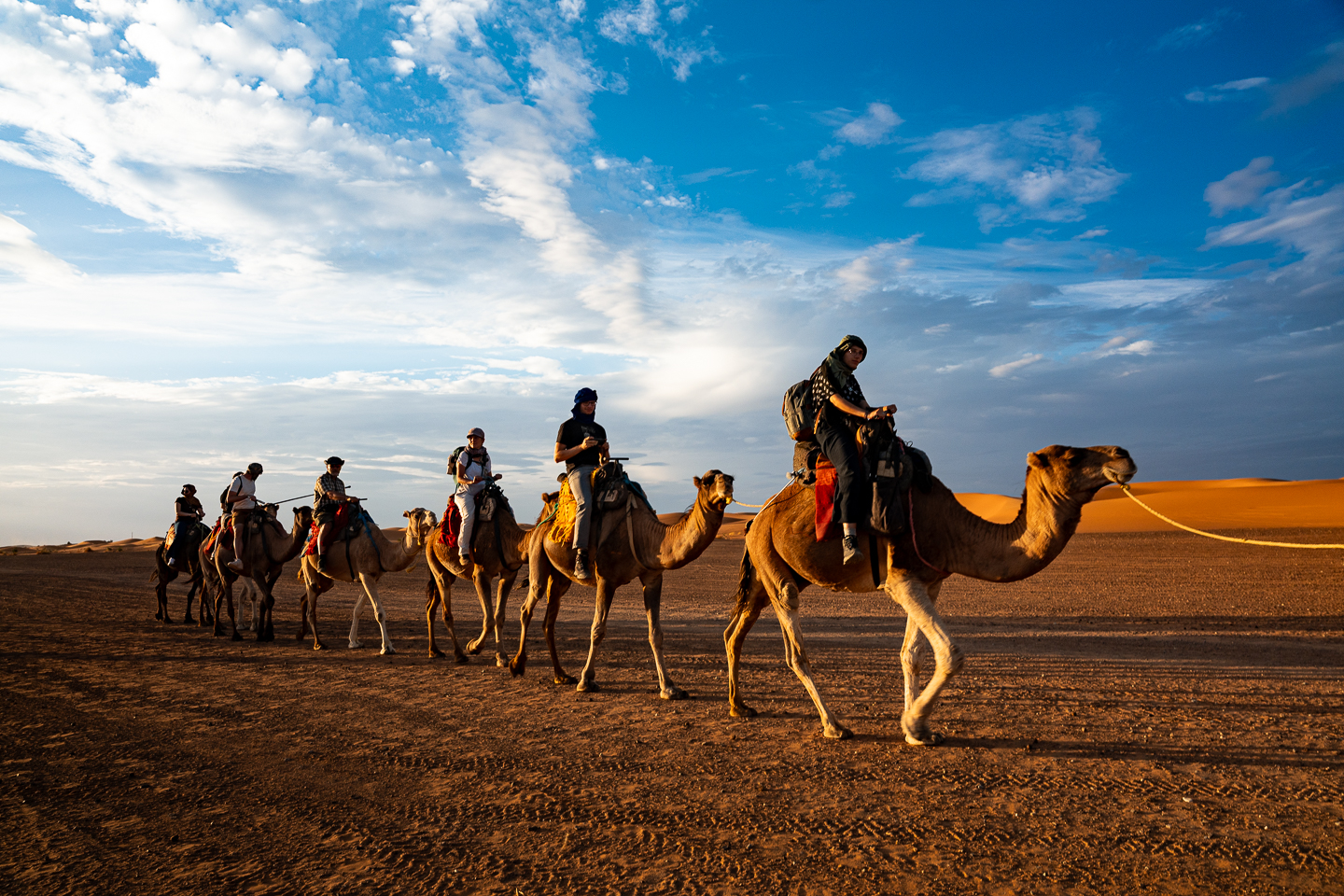
The afternoon crosses rugged, open landscape towards Merzouga, at the edge of the Erg Chebbi dunes, the largest sand sea in Morocco. At sunset you leave the vehicle behind and ride a camel caravan into the dunes to your desert camp. Evening means dinner by the fire, Berber music and drums, and a sky that is usually clear enough to show the Milky Way.
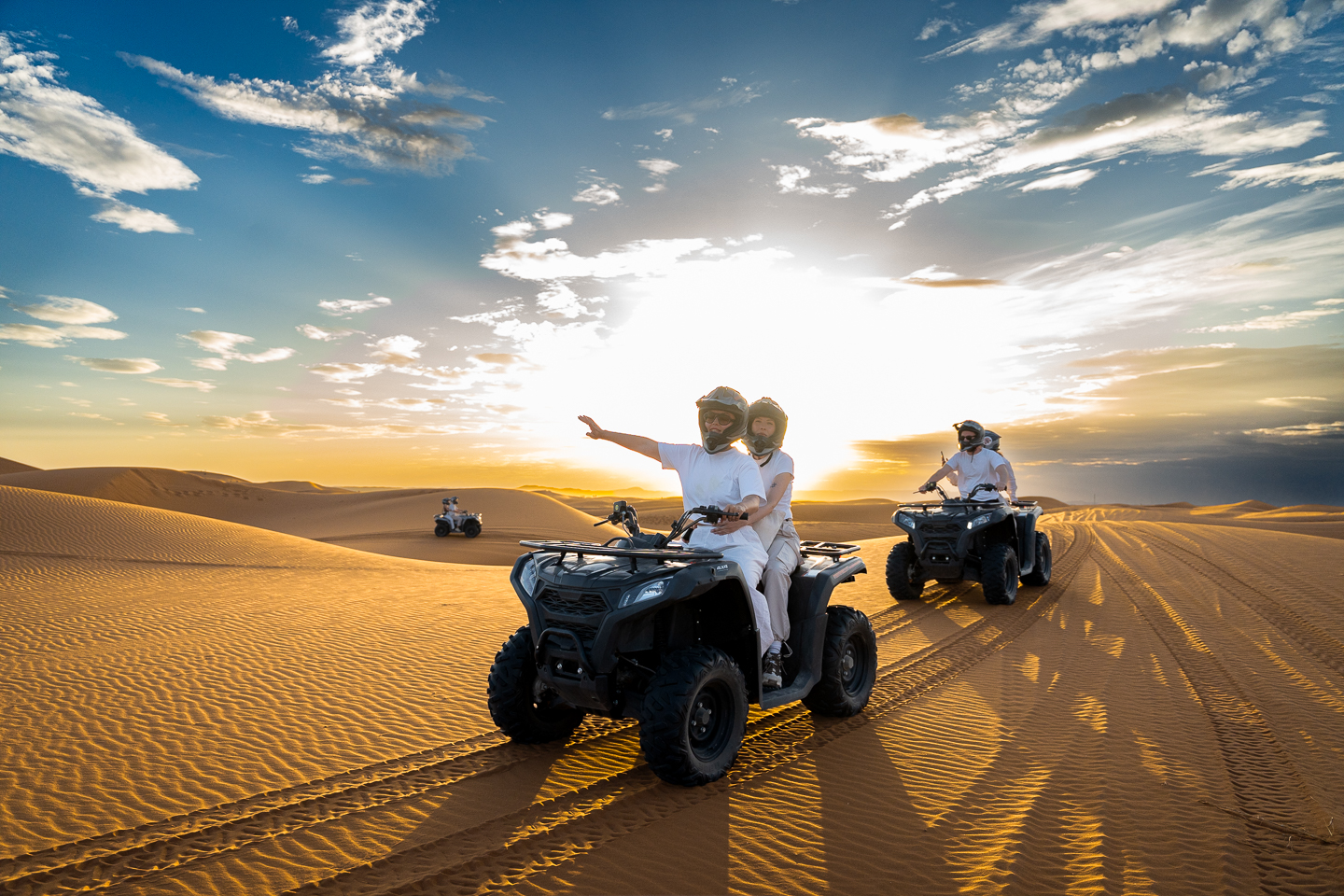
Day 3: Sunrise over the dunes and return to Marrakech
Wake before dawn to watch the first light hit the dune crests, then enjoy breakfast at the camp. The drive back to Marrakech retraces the Dades Valley and crosses the Atlas again; plan for about 9 hours of travel, with stops for lunch and photos. You are dropped off at your riad or hotel in the evening.
What is included in the 3-day Merzouga tour?
Included
Air-conditioned minibus with a bilingual driver
Hotel accommodation
Breakfast from the second day
Camel ride in Erg Chebbi
One night in a desert camp
Not included
Meals and drinks other than those listed above
Tips and personal extras
Ask the team when you book which meals are served at the hotel and the camp on your date, so there are no surprises.
How much does a 3-day Merzouga tour from Marrakech cost?
Bousselham Voyages offers the 3-day Marrakech to Merzouga circuit from €80 per person on a shared departure. You can upgrade the accommodation to Luxury (+€65 per person) or Super Luxury (+€75 per person), or request a private journey with a tailor-made quote. The booking page shows the total for your group size before you send a request.
When is the best time to do the Merzouga desert tour?
The tour runs all year, but the experience changes with the season:
Spring (March to May) and autumn (September to November): the most comfortable temperatures for walking the gorges and riding camels.
Winter (December to February): clear skies and great stargazing, but desert nights are cold and the Atlas pass can be snowy. Pack warm clothing.
Summer (June to August): very hot in the south during the day; the dunes are best at sunrise and sunset.
What to pack for the Sahara
Closed-toe shoes and soft, comfortable clothing
A scarf, hat and sunglasses, plus sunscreen
Warm layers for winter and for desert evenings
A small backpack for the night in camp
Your camera and a power bank
Personal travel insurance
Is the 3-day tour too short? An honest view
Three days is a fast loop: two long driving days at each end and a short, magical stay in the dunes. It suits travellers who want the highlights and have limited time. If you prefer a slower pace or more time in the desert, consider the longer 96-hour Marrakech to Merzouga circuit. For a shorter option, the 48-hour Marrakech to Zagora trip reaches the desert with less driving.
Why book with Bousselham Voyages?
Bousselham Voyages is a Marrakech agency founded by Slimane Bousselham, who built the company so that travellers arrive as guests rather than visitors. The Merzouga route has been refined over years, guides speak English, French and Spanish, and the agency holds a 5.0 rating from 360 Google reviews. One traveller who did the 3-day Sahara trip wrote that the driver and guide was on time, polite and made many stops along the way. You also get a personal reply, not an automated quote.
Frequently asked questions
How long is the drive from Marrakech to Merzouga?
The one-way distance is roughly 560 km and takes a full day with stops, which is why the tour splits it with an overnight in the Dades Valley. The return journey is done in one long day of about 9 hours.
Is a 3-day tour enough to see the Sahara from Marrakech?
Yes, if you accept a fast pace. You get one evening and one sunrise in the Erg Chebbi dunes, plus the main sights on the road. For more desert time, choose the 4-day version.
Where do you sleep on the 3-day Merzouga tour?
The first night is in a hotel in the Dades Valley. The second night is in a traditional desert camp near Merzouga, reached by camel.
Is the camel ride included?
Yes. The camel ride into the Erg Chebbi dunes at sunset and the night in the desert camp are included in the price.
What time does the tour start?
Pick-up is at 07:00 from your accommodation in Marrakech, with departure at 07:30.
Can I book a private 3-day Merzouga tour?
Yes. Choose the private journey option for a tailor-made itinerary and a custom quote, or upgrade a shared tour to Luxury or Super Luxury accommodation.
Do I need to book in advance?
Booking ahead is recommended, especially in spring and autumn. Send your preferred date and number of travellers and the team replies personally.
Ready to book your Merzouga adventure?
See the full circuit and live price on the Marrakech to Merzouga 72-hour page, browse other desert tours and day trips from Marrakech, or message the team on WhatsApp, by phone at +212 633 313 556 or at contact@bousselhamvoyages.com.
